
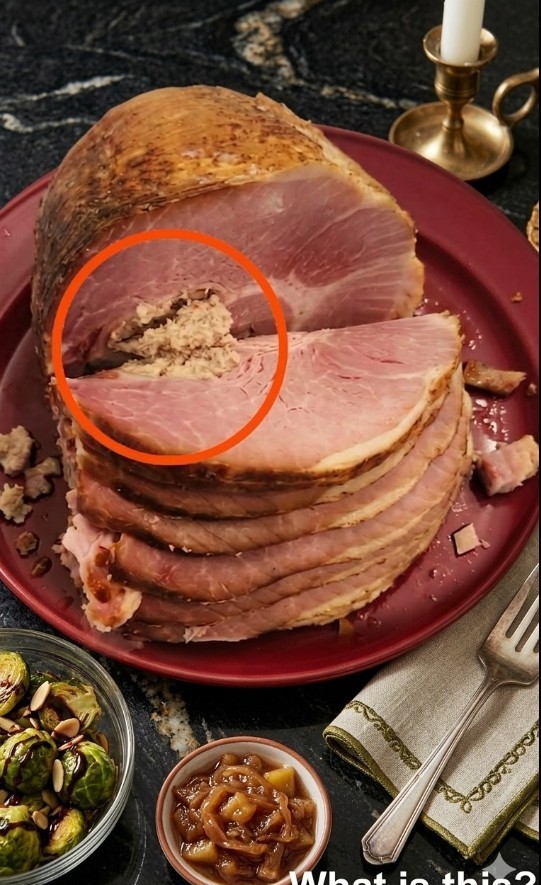
First: What Is Ham, Really?
Before diving into the marks themselves, it helps to understand what ham is.
Ham is pork that has been preserved through curing, smoking, or both. The curing process involves salt, sometimes sugar, and often nitrates or nitrites, which help preserve the meat and give it that familiar pink color.
Because of this processing, ham behaves a little differently than fresh meat. Its texture, color, and even smell can vary depending on how it was prepared—and that’s where many of these “strange marks” come from.
Common Types of Marks on Ham (and What They Mean)
Let’s go through the most common things people notice—and whether they’re harmless or a cause for concern.
1. Iridescent or Rainbow-Like Sheen
This is one of the most alarming-looking effects.
You slice into ham and suddenly see shimmering colors—greens, blues, even purples—reflecting off the surface.
It looks unnatural. Almost chemical.
But here’s the truth: it’s usually harmless.
This effect is caused by light reflecting off the muscle fibers and fat layers in the meat. When the surface is cut in a certain way, it can refract light much like a CD or soap bubble.
What to know:
It does not mean the ham is spoiled
It’s purely a visual effect
It’s more common in processed or sliced ham
If everything else seems normal—smell, texture, expiration date—you’re likely fine.
2. Small White Spots or Crystals
Sometimes you’ll notice tiny white dots or grainy patches inside the ham.
At first glance, they might look like mold—but they’re usually not.
These spots are often crystals formed from amino acids like tyrosine, which naturally occur during the curing and aging process.
They’re especially common in:
Dry-cured or aged hams
Higher-quality, longer-aged products
What to know:
They are safe to eat
They’re actually a sign of aging and flavor development
They may add a slightly crunchy texture
Think of them as similar to the crystals you sometimes find in aged cheese.
ADVERTISEMENT

