
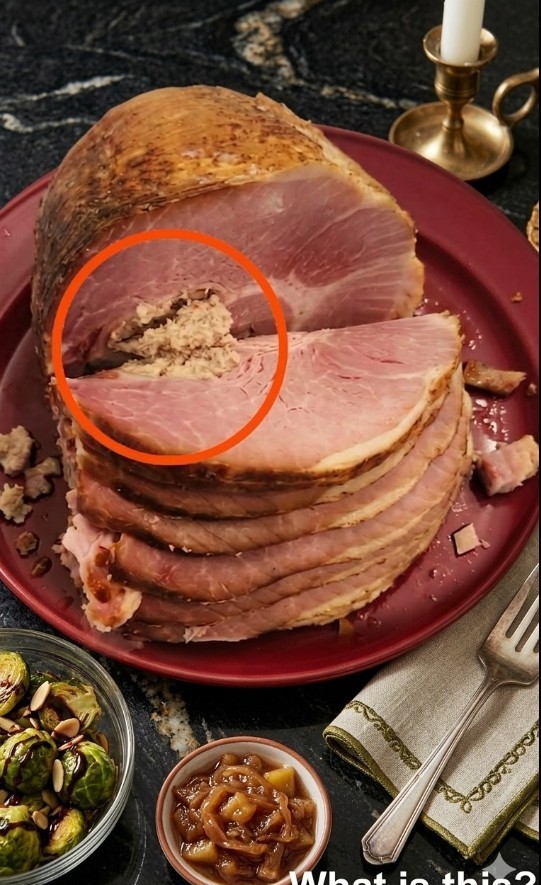
3. Dark Spots or Bruise-Like Marks
Dark patches can be a bit trickier.
These marks may appear as:
Deep red or brown spots
Uneven discoloration
Areas that look almost bruised
In many cases, this comes from blood pooling during processing or minor damage to the muscle tissue.
What to know:
If the smell is normal, it’s often safe
These spots don’t necessarily indicate spoilage
You can cut around them if they bother you
However, if the dark areas are accompanied by a sour smell or slimy texture, that’s a different story (we’ll get to that shortly).
4. Tiny Holes or Pitted Surfaces
Occasionally, ham may have small holes or an uneven, slightly spongy texture.
This can happen during:
Injection curing (where brine is pumped into the meat)
Mechanical tenderizing
Processing and shaping
What to know:
It’s usually a result of manufacturing
It doesn’t automatically mean the ham is unsafe
Texture may feel slightly different but still edible
If the holes look excessive or are paired with unusual odor or stickiness, it’s better to be cautious.
5. Slimy or Sticky Surface
Now we’re moving into warning territory.
ADVERTISEMENT

