
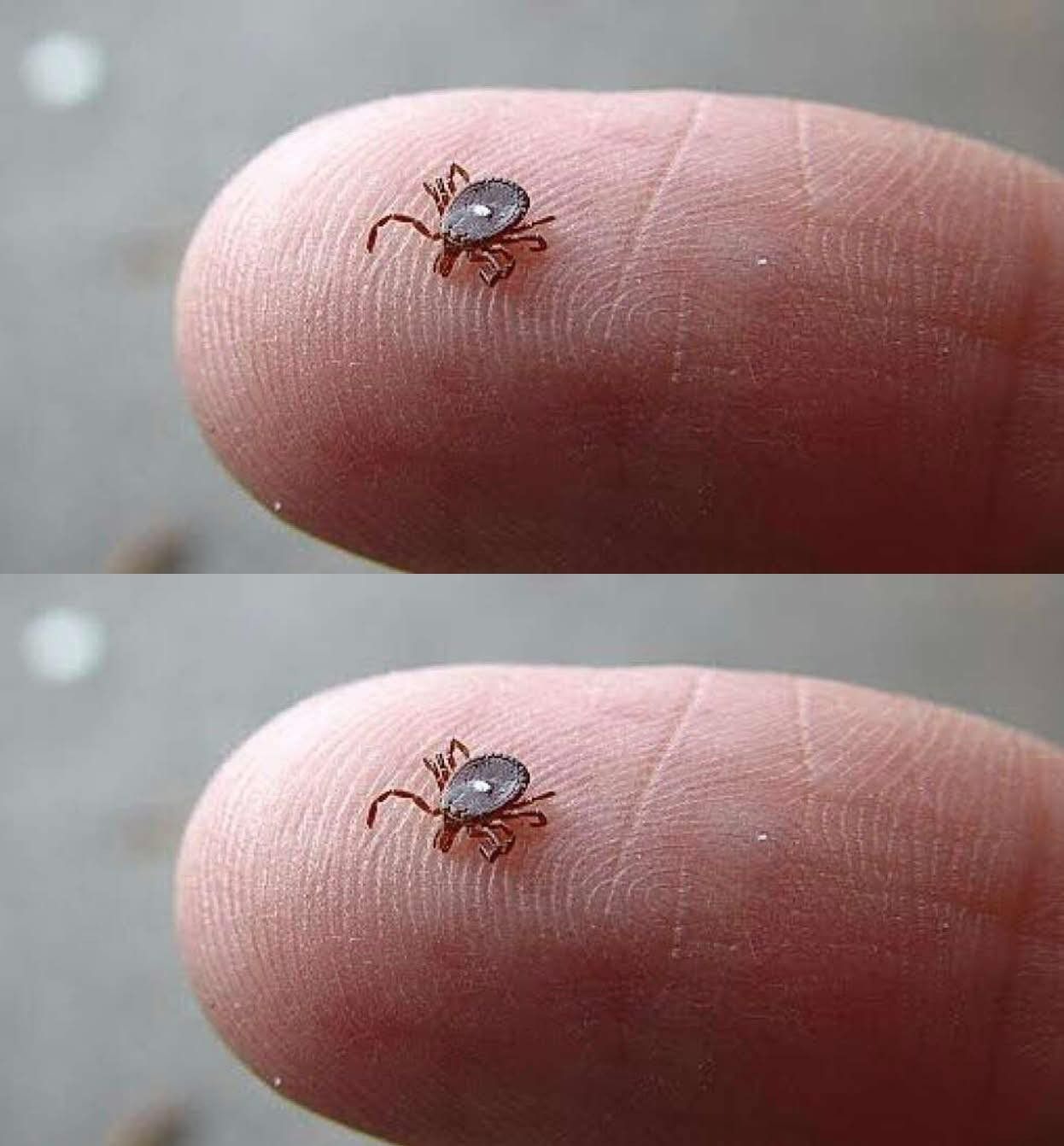
What you’ll need:
-
-
Fine-tipped tweezers (not blunt ones)
-
-
-
Rubbing alcohol
-
Soap and water
-
-
A small container or ziplock bag (optional, for identification)
The Correct Removal Method:
-
Grasp close to the skin. Using fine-tipped tweezers, grasp the tick as close to the skin’s surface as possible. Get right at the mouthparts—don’t grab the body.
-
Pull upward with steady, even pressure. Don’t twist or jerk—this can cause the mouthparts to break off and remain in the skin.
-
Don’t squeeze or crush the tick’s body. Squeezing can force infected fluids back into the bite.
-
Clean the bite area thoroughly. Wash with soap and water, then apply rubbing alcohol or an antiseptic.
-
Save the tick if possible. Place it in a small container or ziplock bag with a damp cotton ball. If you develop symptoms later, having the tick for identification can be valuable.
What NOT to Do:
❌ Don’t use petroleum jelly, nail polish, or gasoline to “smother” the tick
❌ Don’t use heat (matches, lighters) to try to make it detach
❌ Don’t twist or yank
❌ Don’t squeeze the body
These folk methods actually increase risk by causing the tick to regurgitate into the bite.
Step 2: Clean and Monitor the Bite Site
After removal:
-
-
Clean with soap and water again
-
-
-
Apply an antibiotic ointment (like Neosporin)
-
Mark the date on your calendar
-
-
Take a photo of the bite site (for reference)
Watch for These Signs in the Coming Days and Weeks:
| Symptom | When to Worry |
|---|---|
| Redness or irritation | Normal for first 24-48 hours |
| Expanding red rash (may look like a bull’s-eye or solid red patch) | Seek medical attention |
| Fever, chills, muscle aches | Seek medical attention |
| Fatigue, headache, joint pain | Seek medical attention |
| Hives or itching | Seek medical attention |
Step 3: Know the Lone Star Tick’s Unique Risks
STARI (Southern Tick-Associated Rash Illness)
-
-
Rash: A red, expanding “bull’s-eye” rash similar to Lyme disease
-
-
Symptoms: Fatigue, muscle aches, headache, fever
-
Note: Unlike Lyme disease, STARI is not caused by Borrelia burgdorferi and has no confirmed long-term complications, but it still deserves medical attention
Ehrlichiosis
-
Onset: 1-2 weeks after bite
-
Symptoms: Fever, headache, fatigue, muscle aches, nausea
-
Lab findings: Low white blood cell count, low platelets
-
Treatment: Doxycycline (antibiotic)
Alpha-Gal Syndrome (Red Meat Allergy)
This is the most unusual—and increasingly common—condition associated with lone star ticks.
What it is: An allergy to alpha-gal, a sugar molecule found in red meat (beef, pork, lamb, venison) and some mammalian products (gelatin, dairy).
How it happens: The tick bite sensitizes your immune system to alpha-gal. Later, when you eat red meat, your body has an allergic reaction.
Symptoms (delayed):
-
Hives, itching, swelling
-
Stomach pain, nausea, vomiting, diarrhea
-
Difficulty breathing
-
Anaphylaxis (rare but serious)
The catch: Symptoms appear 3-6 hours after eating meat—not immediately. This delay makes it hard to connect the cause.
What to do: If you notice reactions after eating red meat, tell your doctor about the tick bite.
Step 4: When to See a Doctor
See a doctor if:
-
You can’t remove the entire tick (mouthparts remain embedded)
-
The tick was attached for 24 hours or more (though lone star ticks can transmit disease faster than deer ticks)
-
You develop any symptoms (rash, fever, flu-like illness) within 30 days of the bite
-
The bite site becomes infected (increasing redness, warmth, pus)
-
You experience any allergic reaction after eating red meat
For high-risk situations, doctors may recommend a single dose of doxycycline as preventive treatment, though this is more established for Lyme disease than lone star tick diseases.
Step 5: Prevent Future Bites
Lone star ticks are aggressive and active from early spring through late fall. Prevention is key.
Before going outdoors:
-
Wear light-colored clothing (easier to spot ticks)
-
Tuck pants into socks
-
Use EPA-approved repellents (DEET, picaridin, oil of lemon eucalyptus)
-
Treat clothing and gear with permethrin
After being outdoors:
-
Check your entire body thoroughly—lone star ticks are fast and will crawl
-
Pay special attention to: behind knees, groin area, armpits, in and behind ears, belly button, scalp and hairline
-
Shower within 2 hours of coming indoors
-
Check your pets and gear
-
Tumble dry clothes on high heat for 10 minutes to kill any hidden ticks
The Bottom Line
One lone star tick bite doesn’t mean you’ll get sick. Most bites are harmless, and prompt removal dramatically reduces risk. But because this species is aggressive and associated with several unique illnesses (including the red meat allergy), awareness is especially important.
Remember:
-
Remove it correctly (fine-tipped tweezers, steady upward pull)
-
Save the tick (for identification)
-
Watch for symptoms for 30 days
-
See a doctor if rash, fever, or allergic symptoms appear
Stay safe out there.
ADVERTISEMENT

